PCI DSS 4.0 Made Simple: A Comprehensive Guide to the Payment Card Industry Data Security Standard
Introduction
Payment card data remains one of the most targeted assets in the digital economy. As cybercriminals refine their tactics and payment ecosystems grow more complex, organizations that process, store, or transmit cardholder data face increasing pressure to strengthen security controls and demonstrate compliance.
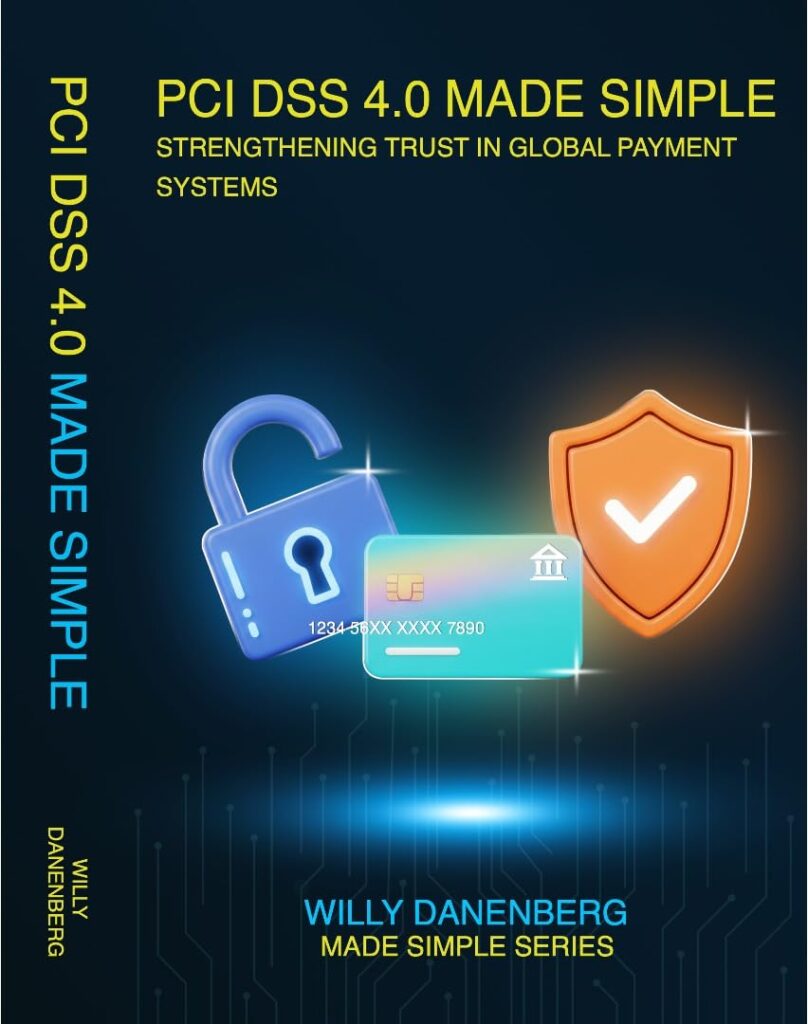
PCI DSS 4.0 Made Simple: A Comprehensive Guide to the Payment Card Industry Data Security Standard by Willy Danenberg addresses this challenge by translating the latest version of PCI DSS into clear, actionable guidance. Rather than overwhelming readers with technical detail, the book explains what PCI DSS 4.0 requires, why the changes matter, and how organizations can implement controls with confidence.
About the Author
Willy Danenberg is a highly experienced compliance, risk, and information security professional with decades of hands-on experience in regulated environments. His work spans payment security, financial services, governance frameworks, and international standards, enabling him to bridge the gap between technical security requirements and business realities.
As a leading author within the IT Made Simple Series, Danenberg is known for making complex regulatory and security standards accessible to professionals at all levels. His writing consistently emphasizes clarity, proportionality, and real-world applicability.
Book Information: PCI DSS 4.0 Made Simple
Title: PCI DSS 4.0 Made Simple: A Comprehensive Guide to the Payment Card Industry Data Security Standard
Author: Willy Danenberg
Publisher: PayServices BV
Publication Date: October 17, 2025
Language: English
Length: 579 pages
ISBN: 979-8901194843
ASIN: B0FWRZCQR7
Format: Kindle Edition / Paperback
Why PCI DSS 4.0 Made Simple Matters Today
The release of PCI DSS 4.0 represents one of the most significant updates to the standard in years. It introduces greater flexibility through customized approaches, strengthens authentication and encryption requirements, and expands monitoring and reporting expectations.
Many organizations struggle to interpret these changes and assess their impact on existing payment environments. This book matters because it:
- Clearly explains what has changed in PCI DSS 4.0
- Helps organizations transition from earlier versions without unnecessary disruption
- Supports both technical teams and executive stakeholders
- Emphasizes risk reduction, not just audit readiness
In a landscape where payment breaches carry severe financial and reputational consequences, clarity around PCI DSS 4.0 is essential.
Overview of PCI DSS 4.0 Made Simple
This guide provides a comprehensive walkthrough of the PCI DSS 4.0 standard, focusing on practical implementation rather than theoretical compliance. Danenberg explains how organizations can protect cardholder data, secure payment environments, and demonstrate ongoing compliance.
Key areas covered include:
- Core PCI DSS principles and security objectives
- Major updates introduced in version 4.0
- Customized and defined approaches to compliance
- Strong authentication and access control requirements
- Encryption, monitoring, and logging expectations
- Assessment preparation and evidence management
The book serves as both a learning resource and an ongoing reference.
The Structure of the Book
The book is structured to support step-by-step understanding and execution:
- Introductory chapters establish PCI DSS fundamentals and scope
- Core sections explain technical and operational requirements
- Implementation-focused chapters address controls, documentation, and monitoring
- Assessment guidance helps organizations prepare for audits and validation
This structure allows readers to navigate the content based on their role and compliance maturity.
Key Lessons from the Book
Several recurring insights stand out:
- Payment security is a shared responsibility
Compliance requires coordination between IT, security, operations, and leadership. - Flexibility comes with accountability
PCI DSS 4.0 allows customized approaches, but they must be well-justified and documented. - Continuous monitoring is essential
Security controls must operate effectively year-round, not just during audits. - Compliance should reduce risk, not increase complexity
The book encourages proportional, risk-based implementation.
Practical Tools and Frameworks
The book places strong emphasis on usability and real-world application, offering:
- Clear explanations of new and updated PCI DSS 4.0 requirements
- Practical guidance for securing cardholder data environments
- Insights into building sustainable monitoring and reporting processes
- Strategies for audit preparation and stakeholder communication
These tools help organizations move from reactive compliance to proactive security management.
Who Should Read PCI DSS 4.0 Made Simple
This book is particularly valuable for:
- Merchants and service providers handling card payments
- IT and information security professionals
- Compliance and risk managers
- PCI DSS assessors and auditors
- Business leaders responsible for payment security governance
It is suitable for both first-time PCI DSS adopters and organizations upgrading to version 4.0.
Conclusion
PCI DSS 4.0 Made Simple: A Comprehensive Guide to the Payment Card Industry Data Security Standard delivers a clear, practical, and authoritative explanation of a critical security framework. Willy Danenberg succeeds in turning a complex and evolving standard into an accessible guide that supports both compliance and real risk reduction.
For any organization involved in payment processing, this book is an essential resource for navigating PCI DSS 4.0 with clarity and confidence.
FAQs
Is this book suitable for beginners in PCI DSS?
Yes. It explains PCI DSS concepts clearly and builds understanding step by step.
Does it cover the new PCI DSS 4.0 requirements in detail?
Yes. The book focuses heavily on changes introduced in version 4.0.
Is the book useful beyond audit preparation?
Absolutely. It emphasizes continuous security and operational effectiveness.
Can non-technical stakeholders benefit from this book?
Yes. The language is accessible, making it suitable for executives and managers.
Does it address both merchants and service providers?
Yes. The guidance is relevant to all organizations subject to PCI DSS.