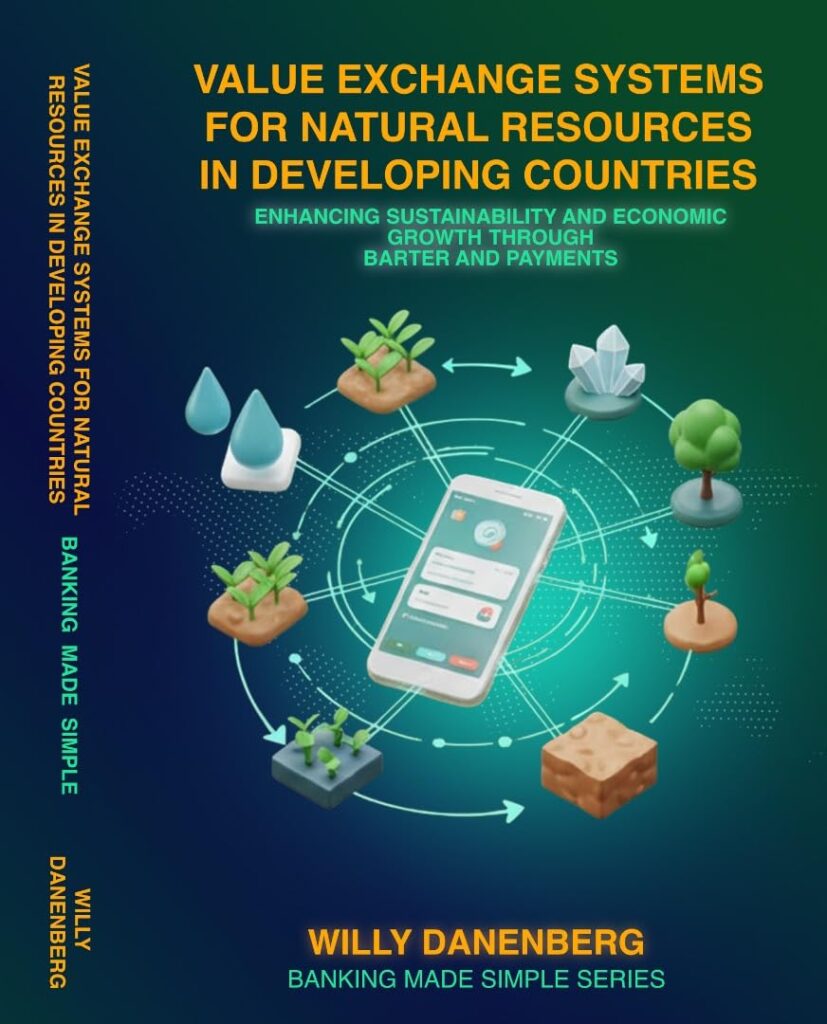
Value Exchange Systems for Rural Agriculture in Developing Countries: Enhancing Exports and Barter for Sustainable Growth
Introduction
Rural agriculture in developing countries faces unique challenges: smallholder farmers often struggle with access to markets, fair pricing, and efficient trade systems. Traditional approaches frequently fail to address the complexity of value exchange in these communities.
Value Exchange Systems for Rural Agriculture in Developing Countries: Enhancing Exports and Barter for Sustainable Growth by Willy Danenberg provides a practical, systems-oriented guide to designing resilient, inclusive, and sustainable rural economic networks. The book empowers policymakers, agricultural leaders, and community organizers to create value exchange systems that boost local economies, improve export potential, and strengthen community resilience.
About the Author
Willy Danenberg is a distinguished expert in financial inclusion, banking, and economic system design. With decades of experience in developing and emerging markets, he combines deep technical knowledge with a keen understanding of real-world community dynamics.
Through his Banking Made Simple and IT Made Simple series, Danenberg has built a reputation for breaking down complex financial, technological, and regulatory systems into actionable guidance. His work emphasizes practical solutions, cultural sensitivity, and long-term impact.
Book Information: Value Exchange Systems for Rural Agriculture in Developing Countries
Title: Value Exchange Systems for Rural Agriculture in Developing Countries: Enhancing Exports and Barter for Sustainable Growth
Author: Willy Danenberg
Publisher: PayServices BV
Publication Date: December 20, 2025
Language: English
Length: 188 pages
ISBN: 979-8902135777
ASIN: B0G9NYX49X
Format: Kindle Edition / Paperback
Series: Banking Made Simple (Book 3 of 3)
Why This Book Matters
Rural communities often rely on informal trade, barter systems, and localized networks for survival. However, these systems can be inefficient, opaque, and vulnerable to external shocks. This book is essential because it:
- Provides a systems-level view of rural value exchange
- Shows how barter and multi-symbol economic systems can enhance resilience
- Connects smallholder farmers to export opportunities
- Offers practical guidance for policymakers and community leaders
- Encourages sustainable, human-centered development rather than short-term fixes
Danenberg’s approach bridges theory and practice, offering insights grounded in lived realities rather than abstract policy.
Overview of the Book
The book delivers a step-by-step guide for designing value exchange systems that:
- Integrate barter networks and local currencies
- Enable fair trade and transparent pricing for farmers
- Link agricultural production to regional and global export markets
- Incorporate natural resources and environmental sustainability into economic planning
- Support resilience and reduce dependency on volatile intermediaries
Each chapter combines practical examples, actionable strategies, and guiding principles for implementation.
Systems Thinking for Rural Agriculture
A key strength of this book is its systems perspective. Rather than treating agricultural challenges as isolated problems, it examines how timing, social obligation, risk, and market power shape outcomes. Readers learn to:
- Map local economic networks and flows
- Identify points where interventions can have meaningful impact
- Build scalable, sustainable exchange systems
- Recognize the human and social dimensions of rural economics
This approach ensures that proposed solutions are effective, adaptable, and culturally sensitive.
Practical Guidance and Tools
The book is rich in frameworks, templates, and actionable guidance for real-world implementation:
- Designing multi-symbol value exchanges
- Developing barter networks and digital trade platforms
- Integrating local natural resources and agricultural outputs
- Metrics for tracking effectiveness and resilience
- Steps for connecting rural producers to export markets
These tools make it possible for leaders to move from concept to execution confidently.
Who Should Read This Book
This book is particularly valuable for:
- Policymakers and agricultural planners
- Rural development NGOs and community organizers
- Cooperative and farmer association leaders
- Economic development consultants
- Researchers and students in agricultural economics
- Anyone seeking practical approaches to sustainable rural value exchange
Its focus on both strategy and operational execution makes it suitable for decision-makers and practitioners alike.
Conclusion
Value Exchange Systems for Rural Agriculture in Developing Countries is a vital resource for anyone committed to sustainable rural development. Willy Danenberg combines intellectual rigor with practical insight to offer a blueprint for improving economic resilience, enhancing exports, and empowering communities.
For those seeking to transform rural agriculture through thoughtful, system-based interventions, this book is an essential guide.
FAQs
Is this book technical?
It is written to be practical and actionable, with minimal technical jargon.
Does it address export markets?
Yes. It connects rural production to regional and global trade.
Can it help policymakers and NGOs alike?
Absolutely. The frameworks and examples are adaptable to multiple roles.
Is this part of a series?
Yes. It is Book 3 of the Banking Made Simple series.
Does it provide tools for implementation?
Yes. Templates, frameworks, and actionable steps are included for immediate use.