IT Architecture Made Simple: Mastering Modern IT Architecture with Simplified Tools, Techniques, and Strategies
Introduction
Modern organizations rely on increasingly complex technology landscapes, yet many struggle to understand how systems, platforms, and infrastructure fit together in a coherent way. Without clear architectural thinking, IT environments become fragmented, costly, and misaligned with business goals.
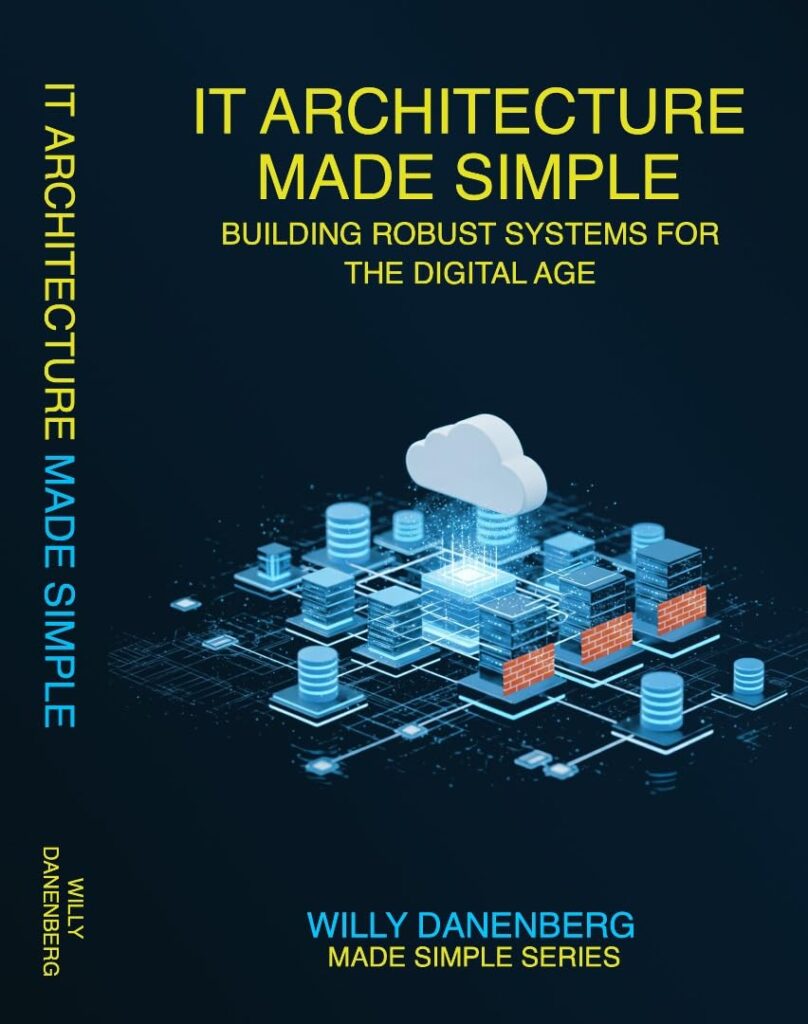
IT Architecture Made Simple: Mastering Modern IT Architecture with Simplified Tools, Techniques, and Strategies by Willy Danenberg addresses this challenge by presenting IT architecture in a clear, structured, and practical manner. The book explains how architectural decisions support strategy, scalability, security, and long-term operational efficiency—without unnecessary abstraction or jargon.
About the Author
Willy Danenberg is an experienced IT, compliance, and governance professional with decades of hands-on involvement in designing and advising on complex technology environments. His career spans enterprise architecture, information security, regulatory frameworks, and digital transformation initiatives across multiple industries.
As the author of several titles in the IT Made Simple Series, Danenberg is recognized for his ability to translate complex technical frameworks into accessible, business-oriented guidance. His writing consistently focuses on clarity, structure, and real-world applicability.
Book Information: IT Architecture Made Simple
Title: IT Architecture Made Simple: Mastering Modern IT Architecture with Simplified Tools, Techniques, and Strategies
Author: Willy Danenberg
Publisher: PayServices BV
Publication Date: October 18, 2025
Language: English
Length: 194 pages
ISBN: 979-8901194829
ASIN: B0FWY61PH3
Format: Kindle Edition / Paperback
Why IT Architecture Made Simple Matters Today
Digital transformation, cloud adoption, microservices, and increasing security demands have made IT architecture more critical than ever. Yet architecture is often misunderstood as either overly theoretical or disconnected from day-to-day engineering and business needs.
This book matters because it:
- Connects architectural principles directly to business strategy
- Explains architecture in a way that is useful for both technical and non-technical stakeholders
- Helps organizations design systems that are scalable, secure, and maintainable
- Provides clarity in an era of rapidly evolving technologies and frameworks
Rather than promoting a single methodology, the book encourages informed architectural decision-making.
Overview of IT Architecture Made Simple
The book provides a comprehensive yet accessible overview of modern IT architecture concepts. Danenberg explains how architecture serves as a bridge between business objectives and technical implementation.
Key topics include:
- Core architectural layers: business, data, application, and technology
- Enterprise architecture frameworks such as TOGAF and Zachman
- System integration and interoperability
- Governance, security, and compliance considerations
- Scalability, resilience, and future-proofing IT environments
Each concept is reinforced with practical examples that help readers see how theory translates into real systems.
The Structure of the Book
The book is structured to guide readers from foundational understanding to practical application:
- Introductory chapters establish architectural fundamentals and terminology
- Core sections explore architectural layers and design principles
- Framework-focused chapters explain how established models can be applied pragmatically
- Applied guidance connects architecture to governance, security, and operations
This structure makes the book suitable both for sequential reading and as a reference.
Key Lessons from the Book
Several key insights emerge throughout the book:
- Architecture is a business enabler
Effective architecture aligns technology with organizational goals. - Simplicity improves sustainability
Over-engineered solutions often create long-term risk and cost. - Frameworks are tools, not rules
Models like TOGAF and Zachman should be adapted, not blindly followed. - Security and governance must be built in
Architecture plays a critical role in risk management and compliance.
Practical Tools and Frameworks
The book emphasizes practical application and provides:
- Clear explanations of architectural frameworks and when to use them
- Guidance on designing interoperable and scalable systems
- Insights into architectural governance and decision-making
- Real-world examples across industries such as banking, healthcare, and the public sector
These tools help readers apply architectural thinking without unnecessary complexity.
Who Should Read IT Architecture Made Simple
This book is well-suited for:
- Enterprise and solution architects
- IT managers and engineers
- CIOs and technology leaders
- Students and early-career professionals
- Business stakeholders involved in technology decisions
It is particularly valuable for those seeking a practical, business-aligned approach to IT architecture.
Conclusion
IT Architecture Made Simple: Mastering Modern IT Architecture with Simplified Tools, Techniques, and Strategies succeeds in making a traditionally abstract discipline approachable and actionable. Willy Danenberg distills decades of architectural experience into a clear, structured guide that helps readers design IT landscapes aligned with strategy, security, and scalability.
For professionals navigating modern, complex technology environments, this book is a reliable and practical companion.
FAQs
Is this book suitable for beginners in IT architecture?
Yes. The book introduces concepts gradually and explains them in plain language.
Does it cover modern architectural styles such as microservices?
Yes. The book discusses modern design approaches alongside traditional frameworks.
Is the book useful for non-technical leaders?
Yes. It emphasizes business alignment and governance, making it relevant for executives.
Does it focus on a single framework like TOGAF?
No. It explains multiple frameworks and how to apply them pragmatically.
Can this book be used as a reference guide?
Yes. Its structured layout makes it suitable for ongoing reference.